Architecture with soul
Luis Barragán was an architect from Guadalajara and the only Mexican to have received the Pritzker Prize.
Guadalajara is famous for many things, but primarily for its beautiful architecture, present in the Historic Center and in some surrounding neighborhoods, such as the Americana and Lafayette colonies, which are characterized by Barragán-style buildings.
This week, we bring you a tour of some of the most notable houses by architect Luis Barragán and his impact on the city's architecture in the late 1930s, especially in its oldest neighborhoods.
.jpeg)
Who is Luis Barragán?
Let's start by noting that Luis Barragán was an architect from Guadalajara, considered one of the most influential of the 20th century and the only Mexican to have received the Pritzker Prize in 1980, which is, in short, the equivalent of the Nobel Prize for architecture.
While many of his most recognized projects and designs are located in Mexico City, our city preserves his early work, where he left an important mark and a great source of inspiration for the construction of various areas of Guadalajara.
%25202.jpeg)
His first houses in the Americana neighborhood show a strong influence of Spanish regionalism, with courtyards, gardens, and neo-colonial details. His architecture is famous for the adaptation of elements such as arches, lattices, and internal courtyards.
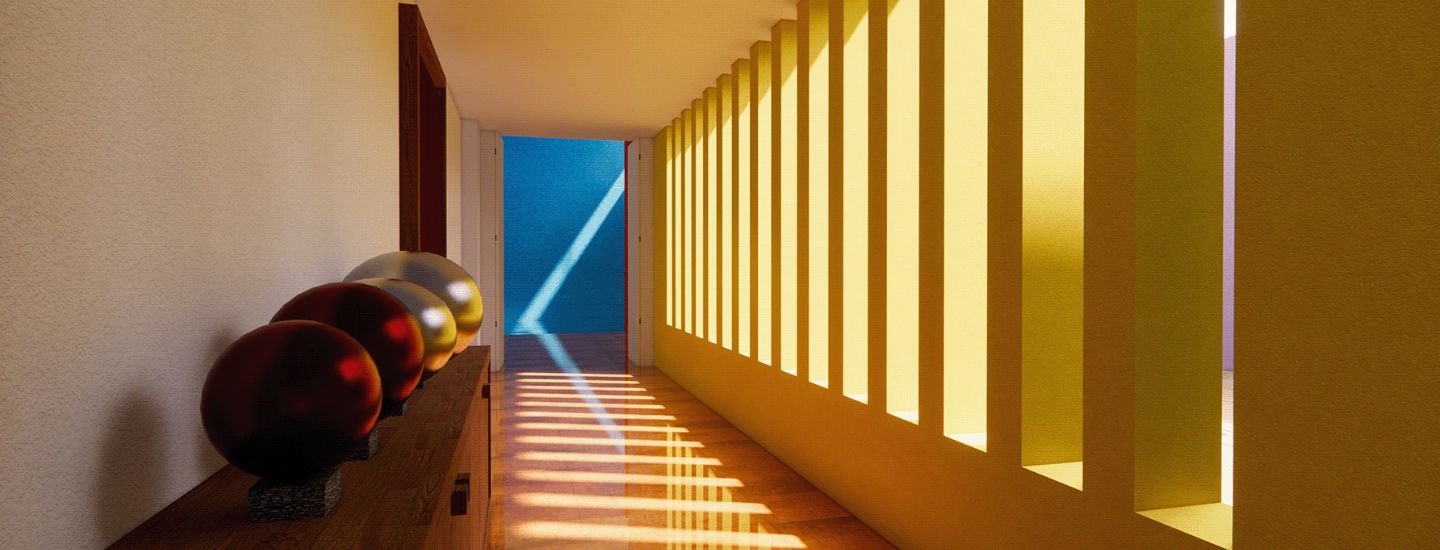
One of his greatest impacts is seen in contemporary development, where he sought to harmoniously integrate architecture, landscape, and natural light. And I would add, a characteristic feature of all his projects is the presence of small spaces filled with internal courtyards, subtle plays of shadow, thick walls, warm colors, and details that allow for the entry of light and natural ventilation, creating spaces that evoke great tranquility.
.jpeg)
CASA FRANCO.
Casa Franco, located at 2276 Lerdo de Tejeda Street in the Lafayette neighborhood, is one of Luis Barragán's first works in Guadalajara. Its design shows the influence of the modernist movement, combined with Mexican vernacular elements. It is currently a private property.
%25203.jpeg)
It is distinguished by its Californian style and by features very representative of Barragán, such as the handling of natural light, simple volumetry, and the integration of gardens. The arches on the facade stand out, as well as the use of natural materials, such as wood and brick.
.jpeg)
CASA CRISTO.
Considered an icon of Guadalajara architecture, this house shows Barragán's transition toward a modern style. It was a private residence, but over time it became the headquarters of the College of Architects of the State of Jalisco, which allowed it to remain a benchmark for architects and design lovers.
An architectural jewel built in 1929, located at 1229 Av. Vallarta in the center of Guadalajara. It represents an early stage in Luis Barragán's career, prior to his characteristic minimalist and colorful style developed later in Mexico City.
%25202.jpeg)
It incorporates traditional elements of Mexican and Moorish architecture, such as high ceilings, lush courtyards, and a harmonious integration with the surroundings, reflecting Barragán’s sensitivity for creating serene and welcoming spaces.
%25202.jpeg)
CASA GONZÁLEZ LUNA / CASA ITESO CLAVIGERO.
Located at 2083 José Guadalupe Zuno Street in the Colonia Americana neighborhood, this house is one of Barragán’s first notable works, also built in 1929. It is a clear example of the regionalist style he developed during his early stages as an architect, before shifting toward modernism and minimalism.
Known for its fusion of Mexican design with Mediterranean and Moorish influences. Its internal courtyards, gardens, and play of natural light stand out, providing serenity and creating a harmonious connection with nature.
.jpeg)
The facade features arches and ornamental details, moving away from the geometric simplicity that already characterized some of his earlier works. The house was originally owned by Efraín González Luna, an influential lawyer and politician from Jalisco. Today, it is better known as CASA ITESO CLAVIGERO it is the headquarters for the Western Institute of Technology and Higher Education (ITESO) and is used for cultural activities and academic events.
Although many of his most iconic works are outside of Guadalajara, his design philosophy continues to set trends in the city's current architecture, especially in the use of open spaces, warm colors, and the relationship between the built environment and nature.
The best part of this tour is that Barragán’s houses are located very close to Barrio México. So, if you plan to stay with us, you already have a great excuse to go out for a walk and explore the neighborhood at your own pace.
If you have the chance to tour the area and book a guided visit, you’ll thank us for it! Find more information on our social media and let us know in the comments which one was your favorite.
See you soon.