A celebration between the living and the dead.
Day of the Dead, one of the most beautiful celebrations and traditions we have in Mexico.
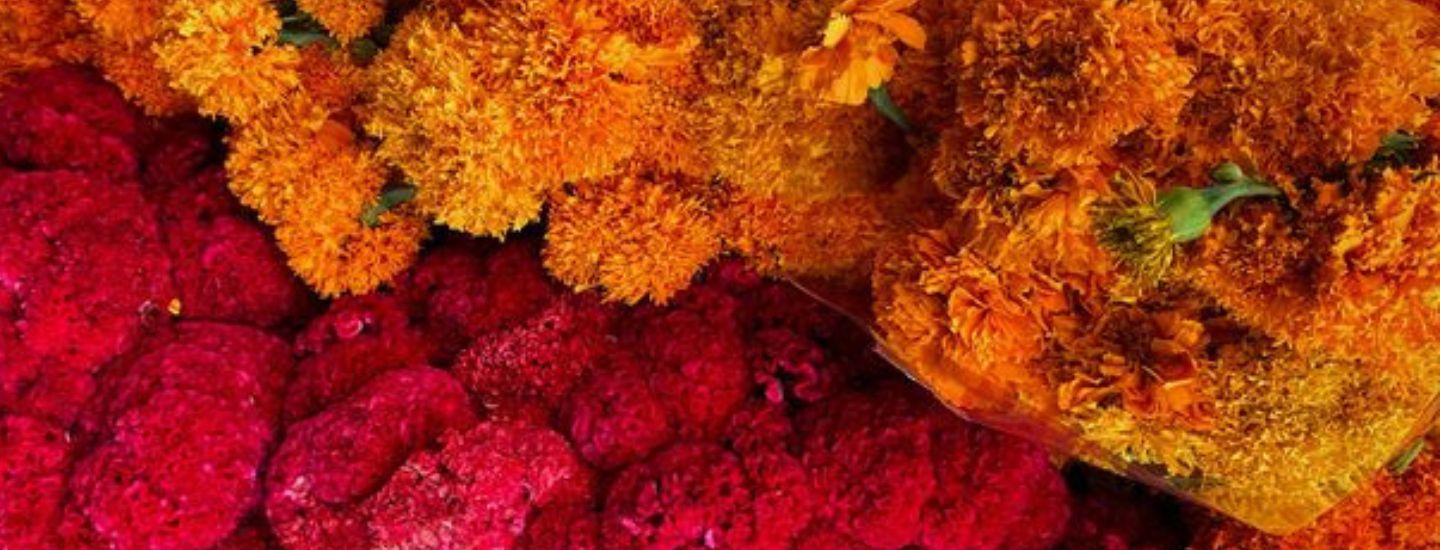
The entire country begins to dress up, surrounded by marigolds in every corner: inside our homes, museums, plazas, iconic landmarks, and cemeteries, with that vibrant orange color that can only mean one thing: the eve of the Day of the Dead is approaching, one of the most beautiful celebrations and traditions we have in Mexico.
We love this season, when everything becomes much more colorful than usual, as we enjoy decorating our homes, workplaces, restaurants, squares, historic buildings, and more. We are the only culture in the world that celebrates and creates such a festive occasion around death and what we become after leaving this plane.
It is very comforting to know that our loved ones will always be present with us in some way and that, as Mexicans, we can pay tribute to them by remembering them every day, especially during this great Day of the Dead celebration.
In 2008, UNESCO declared this holiday as Intangible Cultural Heritage of Humanity, in recognition of Mexico's rich cultural heritage, families, memory, and the transcendence of life.
.jpeg)
How did the Day of the Dead begin?
This tradition was born from the fusion of indigenous beliefs and the Catholic faith to honor all those who have passed away and moved on. The celebration begins on the eve of November 1st and 2nd, where this beautiful tribute keeps memories alive in an atmosphere of joy, respect, and symbolism.
In our pre-Hispanic culture, death is celebrated as a natural part of the life cycle, since for our indigenous ancestors, death did not mean the end, but rather the transition to a new cycle. It was believed that the spirits of the departed returned at a certain time of the year to spend time with their families. With the arrival of the Spanish, this tradition merged with Catholic festivities like All Saints' Day and All Souls' Day, giving rise to the beautiful celebration we know today as "Day of the Dead."
.jpeg)
Do you know the meaning of the symbols placed on an altar?
Of course, there is a reason for everything when it comes to setting up an offering or an altar for our loved ones. These altars are known as "ofrendas" and feature elements characteristic of this celebration.
They are decorated in a handcrafted, colorful way, highlighting orange, purple, and Mexican pink. They are usually set up in homes, schools, cemeteries, or public squares to pay tribute to family members. The design is carefully chosen to guide the departed during their night of returning home (to the world of the living).
Among the most common elements on the altars are marigolds. With their signature orange color, they are the most representative flower of this celebration, symbolizing life and death and used to mark the path for souls to return home.
.jpeg)
Light is represented by all the lit candles, which symbolize hope and eternal love. You have surely smelled the copal incense, whose sacred aroma is used during the night to purify the space, allowing the souls to find their way.
You will also see personalized sugar or chocolate skulls, which often have the names of the departed written on the forehead. These edible skulls represent death as a natural part of life. Don't forget to add photos of your loved ones to the altar to remember them.
Place a cross on the ground made of ash, salt, or marigold petals, representing the four cardinal points to guide the souls. Salt is an element that symbolizes purification, ensuring the soul is not corrupted on its journey back and forth for the following year.
And, of course, the most important elements of the altar cannot be missing, especially when dedicating it to your loved one. You should include their favorite dishes and drinks, such as pan de muerto, mole, tequila, or toys and accessories that remind you of that dear person, as a sign of love and respect in remembering them in this beautiful way.
.jpeg)
Music is the perfect accompaniment to this beautiful tribute. Many people choose to play regional Mexican music, bands, or mariachis—true icons of the music that represents us so well—both at cemeteries and at altars.
A fundamental part of this holiday is the Catrina, one of the most popular figures for this day, which symbolizes that in the face of death, we are all equal, without any distinction. So keep an eye out, because you’re sure to see plenty of catrinas and skulls everywhere in the streets these days.
Ultimately, the Day of the Dead is a blend of solemnity and celebration, showcasing Mexican culture to the entire world. We Mexicans remember and honor death as just another stage of the journey, rather than considering it the end.
How do you celebrate this day?
See you soon.